Full Stack MEAN Stack Development Course in Dehradun

2

Jasmeet Singh

  • 60 hours
  • 60 lectures
  • Home
  • Courses details
  • Overview
  • Curriculum

Description

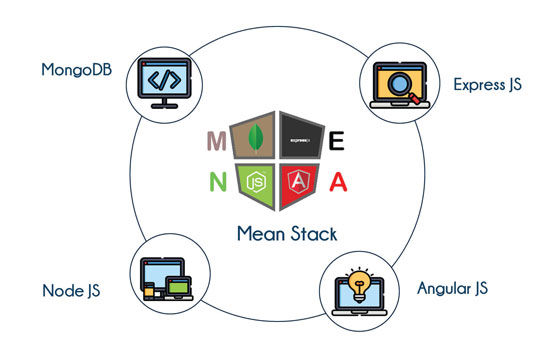
A MEAN stack course provides comprehensive training in the development of web applications using the MEAN stack, a powerful combination of MongoDB, Express.js, Angular, and Node.js.

  1. MongoDB: Explore MongoDB, a NoSQL database known for its flexibility and scalability. Learn to store data in a JSON-like format, and understand how MongoDB seamlessly integrates with Node.js to create robust applications.

  2. Express.js: Dive into Express.js, a web application framework for Node.js. Discover its minimalistic approach and how it simplifies the process of building scalable web applications, with a focus on creating RESTful APIs.

  3. Angular: Master Angular, a powerful JavaScript framework for building dynamic and interactive user interfaces. Learn to create sophisticated front-end components, making Angular ideal for crafting single-page applications (SPAs) with enhanced user experiences.

  4. Node.js: Understand Node.js, the JavaScript runtime designed for executing server-side code. Explore its event-driven architecture and non-blocking capabilities, making it perfect for constructing high-performance web applications.

Throughout the MEAN stack course, participants will gain hands-on experience integrating these technologies to develop full-stack web applications. The curriculum covers essential topics such as setting up the development environment, building servers using Express.js and Node.js, utilizing MongoDB for efficient data storage, and constructing dynamic user interfaces with Angular. Additionally, the course delves into advanced subjects like user authentication, handling API requests, and deploying applications to hosting platforms.

In a MEAN stack course, participants are expected to have a foundational understanding of web technologies, including HTML, CSS, and JavaScript. Proficiency in JavaScript programming is crucial, as well as a familiarity with Node.js and npm (Node Package Manager). A basic grasp of database concepts is recommended, and learners should be willing to delve into React.js, a fundamental part of the MEAN stack. Additionally, participants should be comfortable working with a text editor or integrated development environment (IDE), possess basic knowledge of Git for version control, be familiar with the command line for executing commands, and have access to a computer with internet connectivity. The course requires a commitment of time and motivation from learners to successfully grasp and apply the concepts covered.

In a MEAN (MongoDB, Express.js, Angular, Node.js) stack course, participants will acquire the skills to construct full-stack web applications. The curriculum primarily focuses on establishing a server using Express.js and Node.js, connecting to MongoDB for efficient data storage, crafting dynamic user interfaces with Angular, and deploying applications. Moreover, the course explores advanced topics such as user authentication, API handling, and hands-on project development to reinforce theoretical concepts.
  • HTML
    Introduction to HTML
    HTML Document Structure
    HTML Elements and Tags
    Text Formatting in HTML
    HTML Lists and Tables
    HTML Forms
    HTML Multimedia (Images, Audio, Video)
    HTML Links and Anchors
    HTML Semantic Elements
    HTML Best Practices
  • CSS
    Introduction to CSS
    CSS Selectors and Properties
    CSS Box Model
    CSS Layouts
    CSS Flexbox and Grid
    CSS Transitions and Animations
    CSS Responsive Design
    CSS Preprocessors (e.g., Sass)
    Advanced CSS Techniques
    CSS Best Practices
  • Bootstrap 5
    Introduction to Bootstrap 5
    Bootstrap 5 Grid System
    Bootstrap 5 Components (Buttons, Cards, Forms)
    Bootstrap 5 Navigation
    Bootstrap 5 Utilities
    Responsive Design with Bootstrap 5
    Customizing Bootstrap 5
    Advanced Bootstrap 5 Features
    Bootstrap 5 Best Practices
  • JavaScript
    Introduction to JavaScript
    JavaScript Basics (Variables, Data Types, Operators)
    Control Flow and Looping in JavaScript
    Functions and Scope in JavaScript
    JavaScript Objects and Arrays
    DOM Manipulation with JavaScript
    Asynchronous JavaScript (Promises, Async/Await)
    Introduction to AJAX and Fetch API
    Introduction to ES6+ Features
    JavaScript Design Patterns
    Introduction to Node.js
    Express.js for Server-Side Development
    RESTful APIs with Node.js and Express
    Introduction to MongoDB and Mongoose
    Full-Stack JavaScript Project
    JavaScript Best Practices
  • MySQL
    Introduction to Relational Databases
    Getting Started with MySQL
    MySQL Data Types and Operators
    Creating and Managing MySQL Tables
    SQL Queries: SELECT, WHERE, JOIN
    Advanced SQL Queries: GROUP BY, HAVING, Subqueries
    Indexing and Optimization in MySQL
    Transactions and Concurrency Control
    Stored Procedures and Functions
    Triggers and Events in MySQL
    Backup and Recovery in MySQL
    MySQL Security Best Practices
    Connecting MySQL with Server-Side Languages (e.g., Node.js, PHP)
    MySQL Project: Database Design and Implementation
    MySQL Best Practices
  • MongoDB
    Introduction to NoSQL Databases
    Getting Started with MongoDB
    MongoDB Data Modeling
    CRUD Operations in MongoDB
    Querying and Indexing in MongoDB
    Aggregation Framework in MongoDB
    MongoDB Atlas: Cloud Database Hosting
    Transactions and Concurrency in MongoDB
    Security in MongoDB
    Geospatial Queries in MongoDB
    Full-Text Search in MongoDB
    MongoDB and Node.js Integration
    MongoDB Project: Database Design and Implementation
    MongoDB Best Practices
  • Angular
    Introduction to Angular
    Components and Templates in Angular
    Data Binding and Interpolation
    Handling Events in Angular
    Angular Services and Dependency Injection
    Routing in Angular
    Forms and Reactive Forms in Angular
    Angular Modules and NgModules
    State Management in Angular
    Angular Directives and Pipes
    Testing in Angular (Jasmine, Karma)
    Server-Side Rendering (Angular Universal)
    Styling in Angular (CSS, SCSS)
    Angular and APIs (HttpClient, Observables)
    Building a Full-Stack Application with Angular
    Angular Best Practices
  • Express.js
    Introduction to Express.js
    Setting Up an Express.js Application
    Routing in Express.js
    Middleware in Express.js
    Template Engines with Express.js (e.g., EJS, Pug)
    Working with Forms in Express.js
    File Uploads in Express.js
    Database Integration with Express.js (e.g., MongoDB, MySQL)
    Authentication and Authorization in Express.js
    Error Handling in Express.js
    RESTful APIs with Express.js
    WebSocket Communication with Express.js
    Testing in Express.js (e.g., Mocha, Chai)
    Building a Full-Stack Application with Express.js
    Express.js Best Practices
  • Node.js
    Introduction to Node.js
    Setting Up a Node.js Environment
    Node.js Modules and npm
    Asynchronous Programming in Node.js (Callbacks, Promises, Async/Await)
    File System Operations in Node.js
    HTTP and HTTPS Servers in Node.js
    Express.js and Web Frameworks
    RESTful API Design with Node.js
    WebSocket Communication in Node.js
    Database Integration with Node.js (e.g., MongoDB, MySQL)
    Authentication and Authorization in Node.js
    Testing in Node.js (e.g., Mocha, Chai)
    Building a Full-Stack Application with Node.js
    Deployment and Scaling in Node.js
    Node.js Best Practices
Full Stack MEAN Stack Development Course in Dehradun

18k

This course includes:
  • Study Material
  • Programs
  • Assignments
  • Minor Project
  • Major Project
  • Certificate of completion
Register Now

Start Your Career in Data Science or Web Development

Join TechGuru Dehradun and learn industry-ready technology skills.

Book Free Demo Class